
Theme 2
Early warning- Early Action
SDG Alignment

LSDG Alignment

Summary
In India’s disaster-prone regions, where cyclones strike coasts and flash floods hit valleys, survival often depends on minutes and the systems that save them. The “Early Warning, Early Action” approach marks a shift in disaster risk reduction, enabling communities to act before emergencies escalate. It combines advanced weather forecasting with last-mile communication through mobile alerts and community systems like drums or conches. The innovation lies in trigger-based actions, not just warnings. As river levels rise, flood-prone villages pre-position boats and sandbags; hospitals in heatwave zones activate cooling shelters when thresholds are crossed. Aligned with SDG 13 and the Sendai Framework’s goal of expanding early warning coverage by 2027, this approach transforms disaster management from reaction to prevention. Farmers benefit through crop-specific advisories for sowing, harvesting, and protecting livestock. Governments reduce post-disaster reconstruction costs while improving climate resilience. Though challenges remain such as inclusion gaps, digital divides, and system maintenance the cost-benefit is clear: every rupee spent on early action saves seven in recovery. The focus now is clear act before the storm and turn disaster into managed risk.
From top-down alerts To proactive, last-mile community response
Proactive use of early warnings leading to effective early actions

363 people installed the Climate Adapt App on their devices
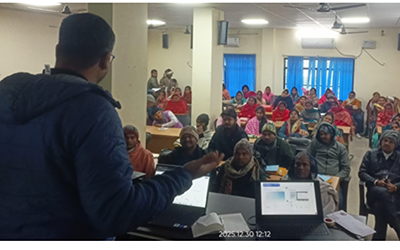
78 Super Users Trained on Using Climate Adapt App.

1444 people trained on importance of Early Warning and Early Action